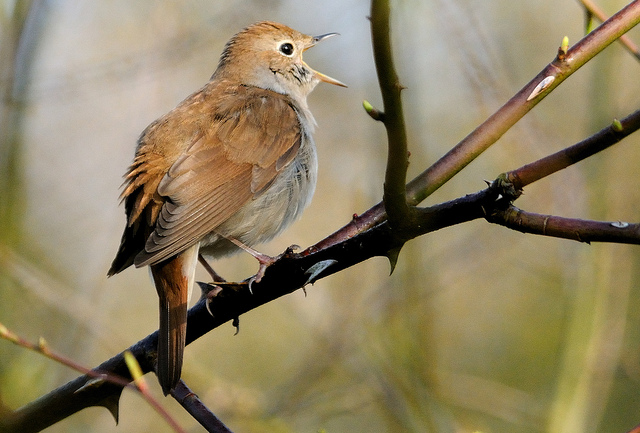
The nightingale might not be one of nature’s showiest stars but what it lacks in looks, the male makes up for in singing and its place in folklore. It’s a bird with an enigmatic appeal and known to most people – mainly thanks to John Keat’s poem, ‘Ode to a Nightingale’ along with all the others written over the centuries about it, plus that well-known song which has been recorded countless times by singers such as Frank Sinatra, Vera Lynn, Nat King Cole, Perry Como, Anita O’Day, Harry Connick Jr, and even Rod Stewart!
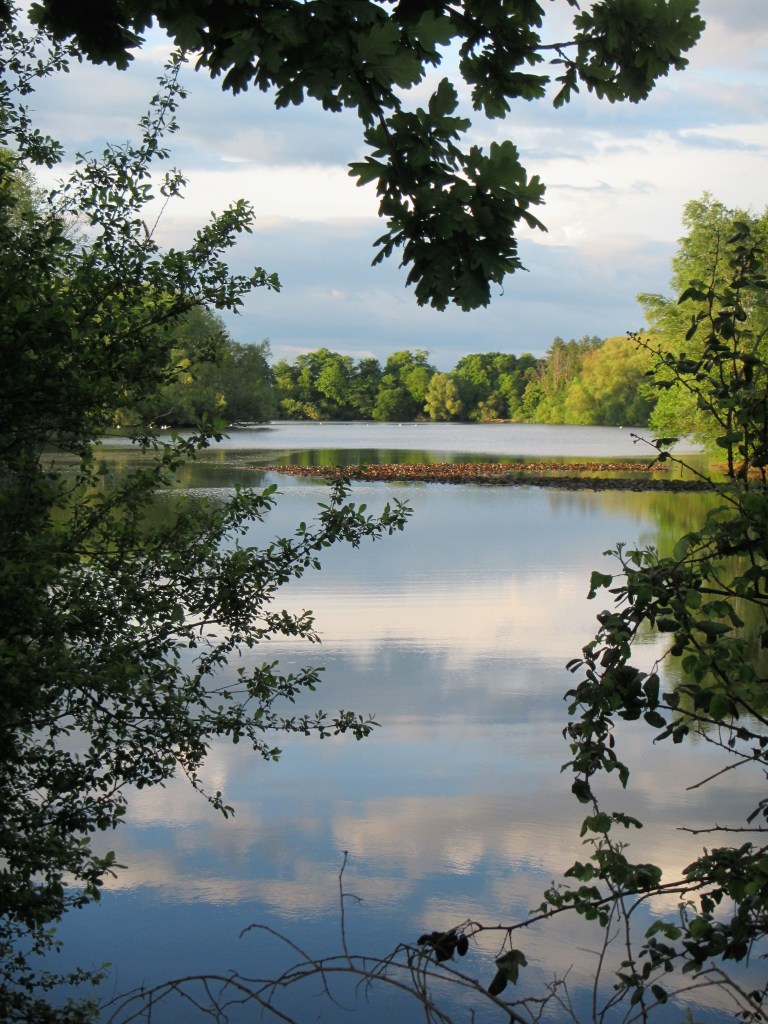
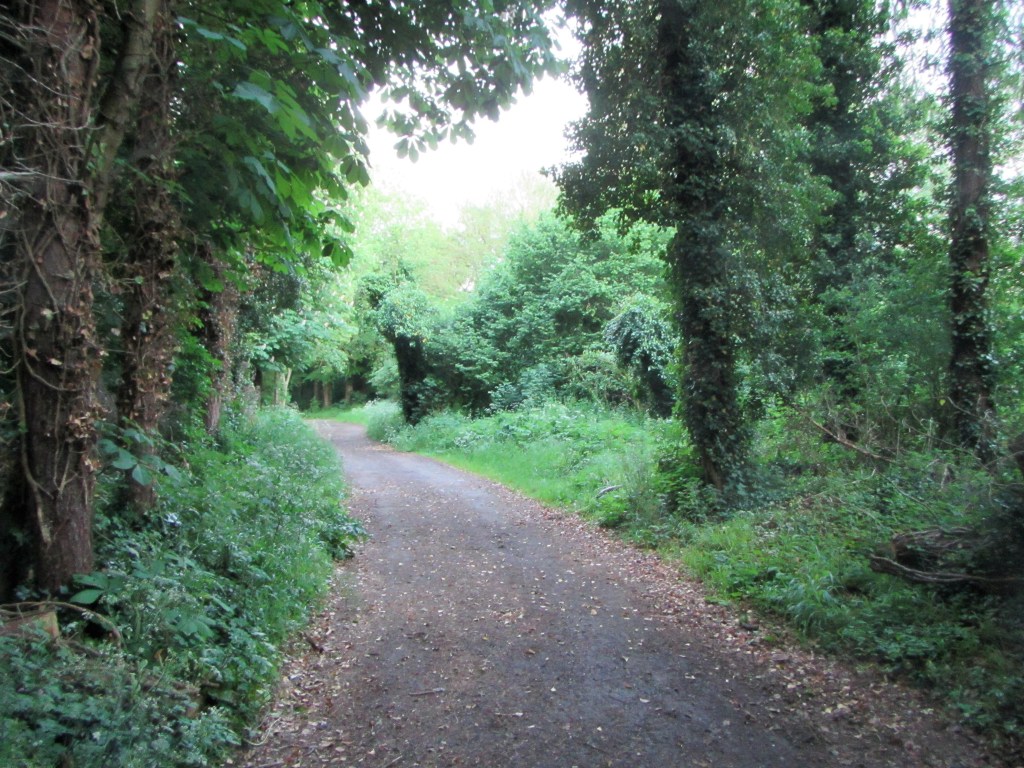
Frampton pools are best known for the sailing club, but between them and the road running into Frampton is a woodland that’s usually the best spot in Stroud district to hear these birds singing. I love visiting the Severn Vale, it’s so different in character and look to that of the landscape around Stroud and the Cotswold escarpment that I feel as if I’ve been in another part of the world for a few hours. Once you’re off the main road, there’s a tranquillity and restfulness that is so soothing. An evening strolling around the woodland near Frampton Pools is a lovely way to spend an hour and can be enriched by a glorious sunset over Frampton Court.
Nightingales arrive in England from Africa about mid-April when the males start tuning up, and then belt out their full symphony to prove themselves irresistable to females. So, the end of April until late May is the best time to visit the pools to stand a chance of catching their song. Evening is the best time to hear it as the sound quality and the quietness of other birds helps the song resonate.
It’s so famous for its song that even in Roman times, the birds were captured and put in cages – a prize singer could cost as much as a slave! In Victorian Times, transport companies put on special trips to hear them, and nightingales were common around London – though it seems highly unlikely that one ever sang in Berkeley Square. In 1703, when the land was bought to build Buckingham Palace, it was said to be ‘a little wilderness full of blackbirds and nightingales’.
It’s a bit of a hard life being a male nightingale at this time of year – they start singing at dawn and carry on until gone midnight so sleep is a luxury! Once the eggs have hatched, the singing stops and both parents focus on the frantic activity of keeping the demanding youngsters fed (most parents will know how relentless that can be). The males are probably glad to migrate back to Africa at the end of July for a rest!
Many folk songs contain a reference to this seasonal songster suggesting that it was once common around England. Now it’s endangered – it’s numbers have decreased by 60% between 1995 and 2009, possibly due to a lack of thorny undergrowth which is its favourite place to hang out. The nightingale was once so common
Unfortunately, the nightingale was having a night off when I last visited or perhaps he was just catching up on some sleep! I could become the object of derision at this point but I have to confess to being somewhat underwhelmed by its song. The first time I heard it was on a guided walk led by a RSPB warden. I was admiring a nearby bird song as we walked through Highnam Woods (north of Gloucester and another great place to hear them) and thinking how the nightingale’s lovely song deserved all the accolades, when the warden said “And on our right you can hear a song thrush.” Hmmm….
I’ve never quite recovered from that, and a song thrush was singing its heart out all the time I walked around the wood recently, as were robins and blackbirds. I can’t help thinking that their songs are generally under-appreciated, maybe they need a famous pop artist to write a song about them. However, my daughter was chuffed to hear a cuckoo for the first time – the pools are also a good place to hear this now scarce bird – so that was a result. Plus, we tracked a frenzied squawking to a hole high up in a tree trunk and realised this must be a brood of extremely impatient woodpecker chicks waiting for their next meal.
Strangely, the nightingales that migrate to England behave differently to those who stop off on mainland Europe – they become shy and hide deep in bushes when they sing. The continental cousins are much showier and easy to see. So the English reserve must be something that’s in the air!
Here’s a link to a recording of the nightingale’s song on the RSPB’s website Nightingale Bird Facts | Luscinia Megarhynchos
When to visit: mid-April to end of May, though the first three weeks of May are probably the best time.
Location: Frampton Pools, Frampton-on-Severn. OS Explorer Map 14 SO753075
How much time to allow: a gentle stroll through the wood takes about an hour.
Terrain: the paths are flat (remember you’re in the Severn Vale so it’s all as flat as a pancake in Frampton) but getting to the wood involves a climb over a couple of stiles. So no good for people with restricted mobility; all-terrain buggies could easily be pushed around the site if they’re light enough to be lifted over the stiles.
Facilities: Frampton has two good pubs (The Bell has a play area for children) plus a community shop (open 9am-1pm Weds + Sats and 9am-5.30pm other weekdays, closed Sundays).
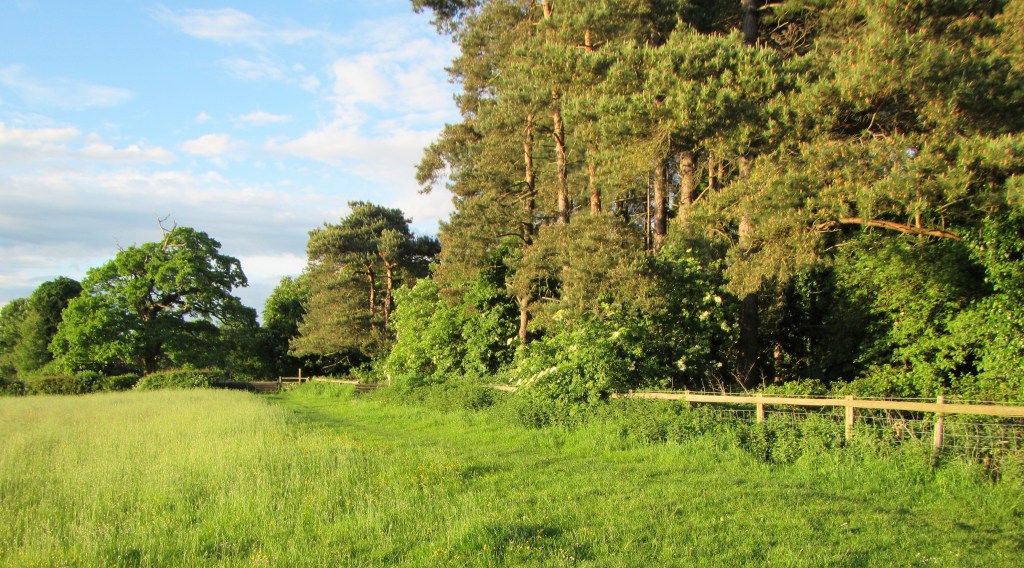
Directions: head into Frampton from the A38, turn left to drive down the centre of the village green (the longest in such green in England) to its end. Turn left and a few yards further on is a small car park on the right hand side. Park and then continue to walk down that lane, skirting around the metalled gate across the road. A few feet further on the left is a public footpath, climb over the stile and walk across the meadow following the diagonal path heading towards the wood at the far end of the field (you’ll see it). Climb over the stile and then follow the path running alongside the wood. It’ll take you to the end of the wood and then veer to the left to go past an open area on the left and a hedgerow on the right. Keep going and then take a footpath to the left, just before you reach the road. This path goes through the wood and brings you to a gate near the entrance of Pan Global Plants. After going through this, turn left to walk across the open pasture land (keep dogs on a lead as there are sheep grazing in this field) with Frampton Court over on the far right hand side. As you near the far fence, veer diagonally to find a stile close to a red brick cottage. Climb over this and then the one on the opposite side of the track. This path takes you through the first field you came through, back to the road. Turn right to walk back to the car park.
It’s only a small wood and there are other paths running through the wood if you want to explore a bit.
Thanks to Kev Chapman for the great photo of the nightingale.