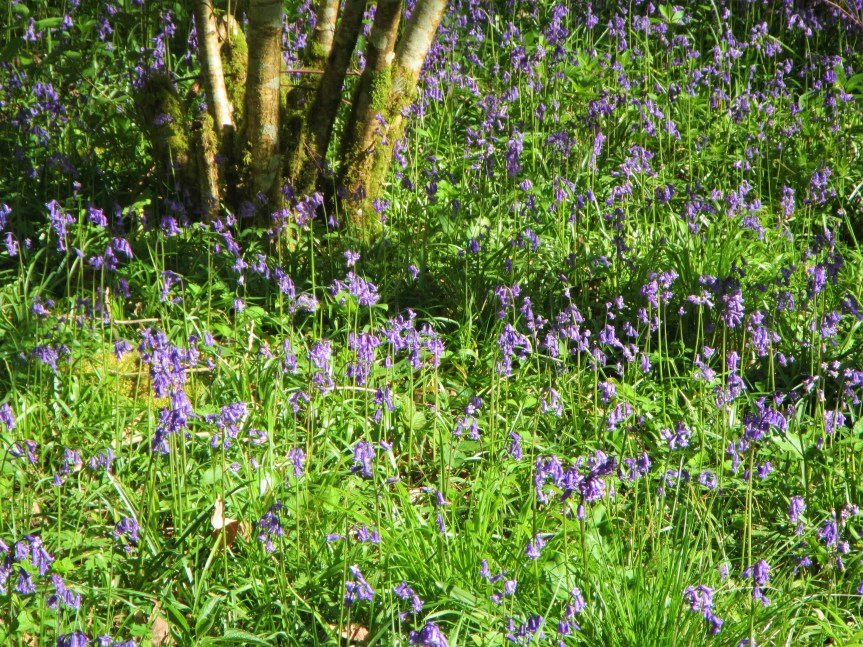
A carpet of bluebells in Siccaridge wood near Frampton Mansell. credit – C Aistrop
The Frome valley must be the closest we have in the Stroud area to a feeling of wilderness. It stretches from Chalford village (near Stroud) for a few miles towards Cirencester and, running along its bottom, the disused Thames & Severn canal offers tiny glimpses into an age of industrial triumph. But its state of decay atmospherically demonstrates how, in the end, nature subtly claims back and subsumes everything. One of the rare bits of human intrusion in the valley is a very welcome one – it’s the excellent Daneway pub, and a return walk from Chalford along the canal towpath taking in lunch at the pub is a popular summer Sunday activity.
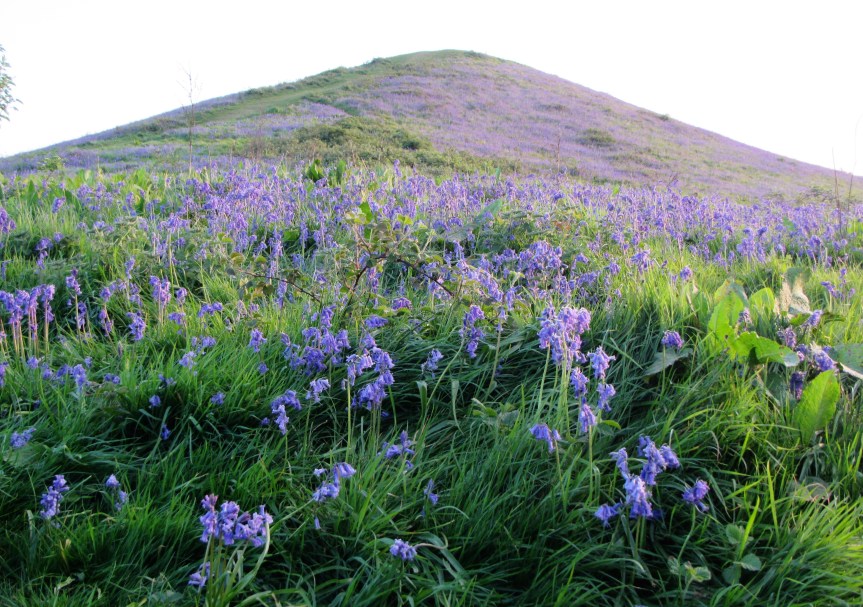
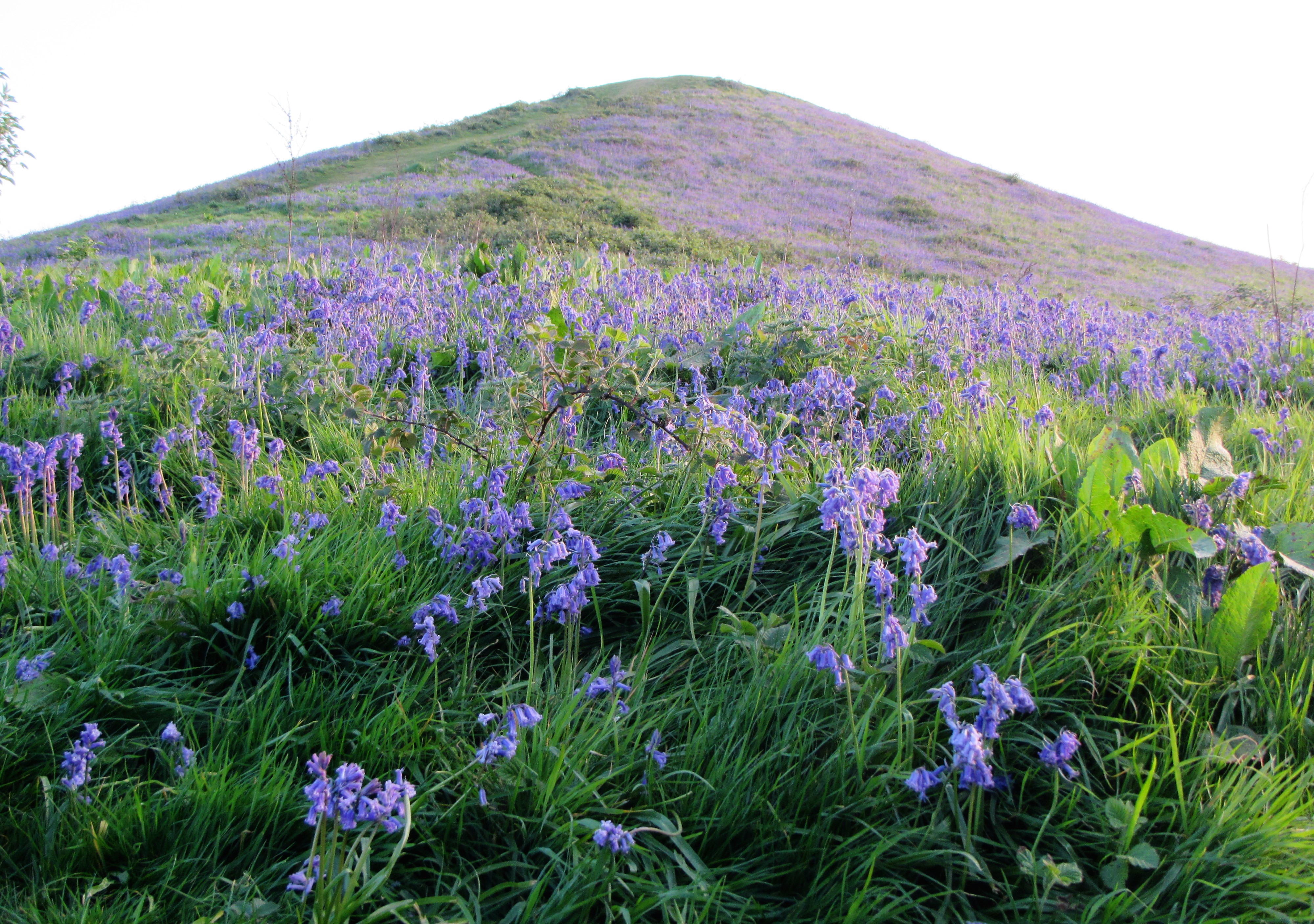
Bluebells cloak the slopes of Cam Peak near Cam, Dursley. Credit – C Aistrop
Despite us still being in a state of shock at the news that this coming bank holiday will be both sunny and warm (when did that last happen?!), a bit of planning means that you could make the most of this and see quite a few wildlife spectacles. May is the month when nature seems to awaken with a start and bound out of bed. It’s May that’s busting out all over, not June. Bluebells, wild garlic and orchid meadows are at their best; nightingales and cuckoos are singing; the dawn chorus is at full crescendo; migrant birds are arriving back from southern climes by the thousands; and hawthorn hedges become coated with the ‘white icing’ created by the profusion of may flowers.
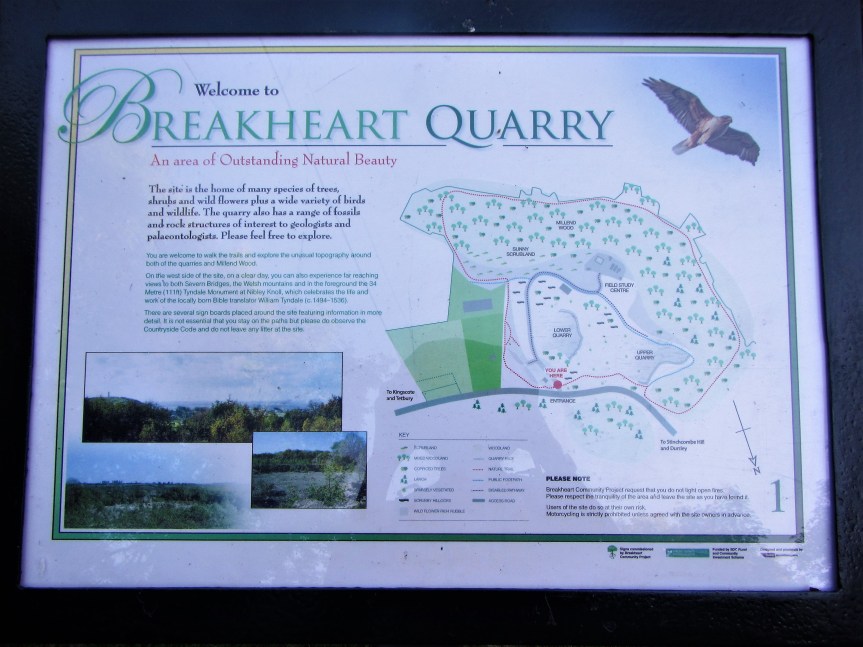
The end of May and beginning of June is a bit of a quiet time with regards to wildlife spectacles. The dawn chorus is still in full swing and, thankfully if you’re not one of those early birds and prefer your cosy bed as I do, so is the dusk chorus albeit not as loud as the crack-of-dawn one. So this hiatus makes it a good time to get to grips with trees – no, not hugging them but seeing and appreciating the different types we have in this country. A great place to go is Breakheart Quarry near Dursley as there’s a fabulous range of trees growing there, it’s very family friendly and the flat footpath circumnavigating the site may even be suitable for people with restricted mobility.
I love visiting the Severn Vale, it’s so different to the character and look of the landscape around Stroud and on the Cotswold escarpment that I feel as if I’ve been in another part of the world for a few hours. Once you’re off the main road, there’s a tranquillity and restfulness that I find so soothing. Last Friday evening strolling around the woodland near Frampton Pools was no different and was enhanced by a glorious sunset over Frampton Court.
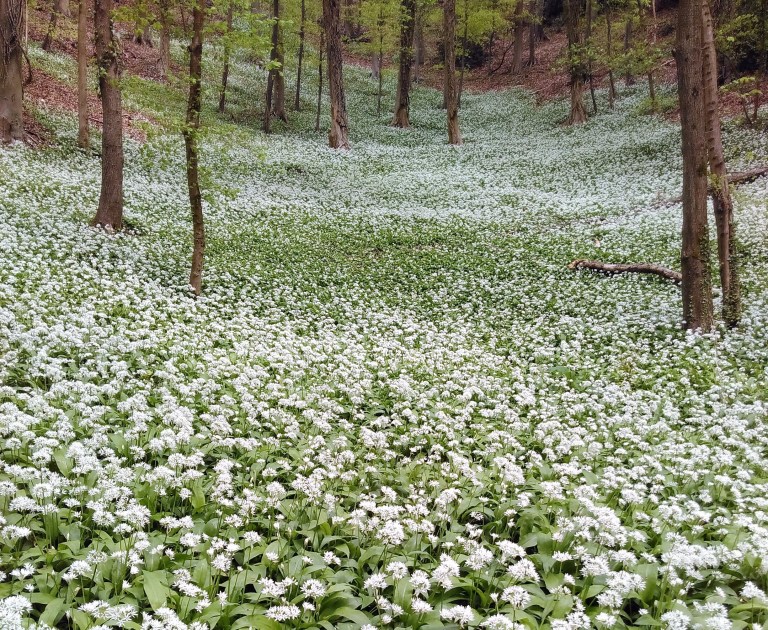
Stratford Park must be the jewel in Stroud’s urban wildlife crown. It has a small area of lovely, more ‘wild’ woodland tucked well away from the formal bit of the park and I’d bet a whole pile of money that most people using the leisure centre don’t know of it’s existence. But in May, the woodland floor becomes covered in ‘spring snow’ as the glorious garlic spectacle erupts and, because of the park’s location and footpaths, it’s one of the easiest to reach and enjoy.
Often when people think of orchids, the image of the big ‘n’ blousy type come to mind. That was certainly the picture I’d conjured up when a friend first pointed out a native orchid to me. As she was mad-keen on plants, I think my initial reaction and obvious disappointment crushed her enthusiasm. Ah well, I was only 18 at the time and had yet to learn to appreciate plants and native flowers in general. Now I, too, get as excited as my friend when I see our orchids start to re-appear every spring.
We’re very lucky in Stroud to have so many orchids gracing us with their presence as they’re fussy souls – they need a fungus to associate with their roots or they can’t grow at Continue reading “Not so common orchids on the Common”→
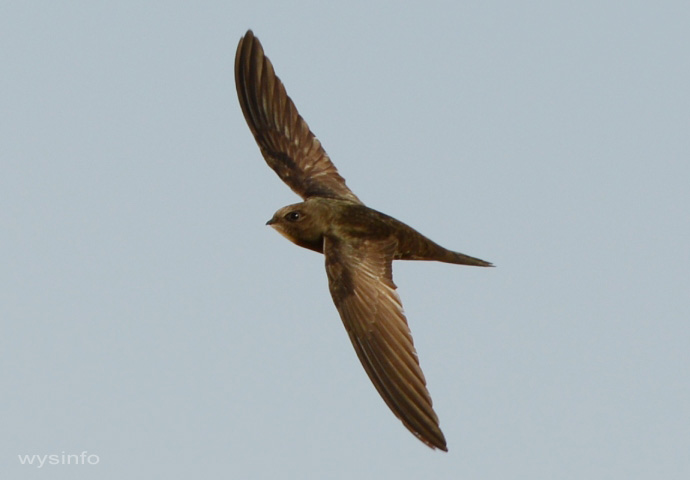
I heard a sound to gladden the heart yesterday – screaming. No, it wasn’t me finding a spider (I have to confess that the long-legged ones make my skin crawl, excuse the pun) but it meant that the swifts have made it back to Stroud for another year. For me, that signals the start of summer despite the grey clouds and cool wind. During my younger years when I lived in the outskirts of York, I never heard this evocative sound as there weren’t any swifts at all. There were oodles of house martins nesting under the eaves of houses all around us, and swallows zipped to and fro, but it wasn’t until I moved to Stroud that I heard this unmistakable sound. This call has given them the nick-name of Jackie Screamers – if anyone knows why ‘jackie’ is used, I’d be interested to know.
Swifts are the last of the ‘hirondelles’ (the name used to describe the swallows, martins and swifts) to arrive and the first to leave at the end of July. They raise their young in a staggeringly short time of 3 months and apart from landing on their nest to feed their young, they stay in the air. Yep, they even mate whilst flying (don’t ask). A swift has been recorded flying at 69.3 mph (111.6km/h), making it the fastest bird to fly horizontally (peregrines fly faster but that’s downwards when they’re hunting prey). Numbers of swifts seem to be declining and it’s thought that loss of nest sites due to building and development is one of the causes, but there seems to be something happening to them whilst in Africa but ecologists aren’t sure what.
On a beautifully sunny day, it can be hard to tell where the bluebells end and the sky starts when gazing at Cam Peak at this time of year. This hill, which is shaped unlike any other in the district and can be seen from miles around, is cloaked with vivid blue all the way round and is truly worth a visit. Especially as it’s so easy to drive to and to park. Local legend tells the story of the Devil pushing a wheelbarrow of soil through Cam with the intention of using it to block the estuary. The Devil stops to ask a local man how much further is the estuary. The quick-thinking man, realising what the Devil is plotting, says that he still has many miles to walk, so the Devil gives up in frustration and empties the wheelbarrow content on the ground creating Cam Peak.
The Peak nestles against the end of the Long Down, though the two aren’t geologically the same. The Long Down was part of the Cotswold escarpment many thousands of years ago Continue reading “A cloak of Bluebells for Cam Peak”→
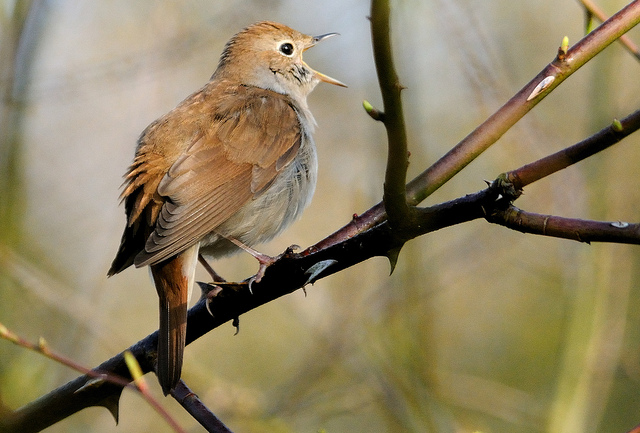
June is busting out all over, so the saying goes. I reckon whoever said this first was a month late. May is the month when nature springs into life, seemingly all of a sudden after the long, slumbering stretch of winter. Flowers and birdsong flare up all over the place in an explosion of activity: bluebells, orchids, cowslips, red campion, yellow archangel, sweet woodruff and many others add bright colours to the backdrop of fresh green vegetation. Nightingales and cuckoos proclaim their presence – elaborately in the former whereas the latter sticks to two simple notes. Many other migrant birds add their song to the cacophony of the dawn chorus, but only until they find a mate when they stop singing and concentrate on the demanding job of raising youngsters. That’s why the later summer months are deathly quiet compared to the soundtrack of May.
Wild garlic woods are one of the fabulous natural spectacles appearing in May around the Stroud district. The wild garlic grows so densely over the woodland floor that the Continue reading “Ambling through garlic in Amberley”→

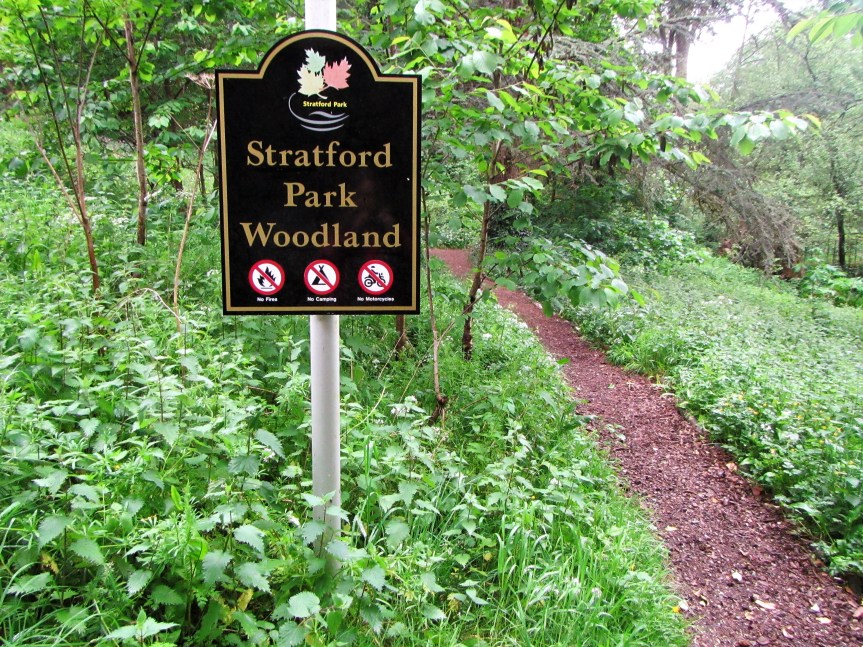 Stratford Park must be the jewel in Stroud’s urban wildlife crown. It has a small area of lovely, more ‘wild’ woodland tucked well away from the formal bit of the park and I’d bet a whole pile of money that most people using the leisure centre don’t know of it’s existence. But in May, the woodland floor becomes covered in ‘spring snow’ as the glorious garlic spectacle erupts and, because of the park’s location and footpaths, it’s one of the easiest to reach and enjoy.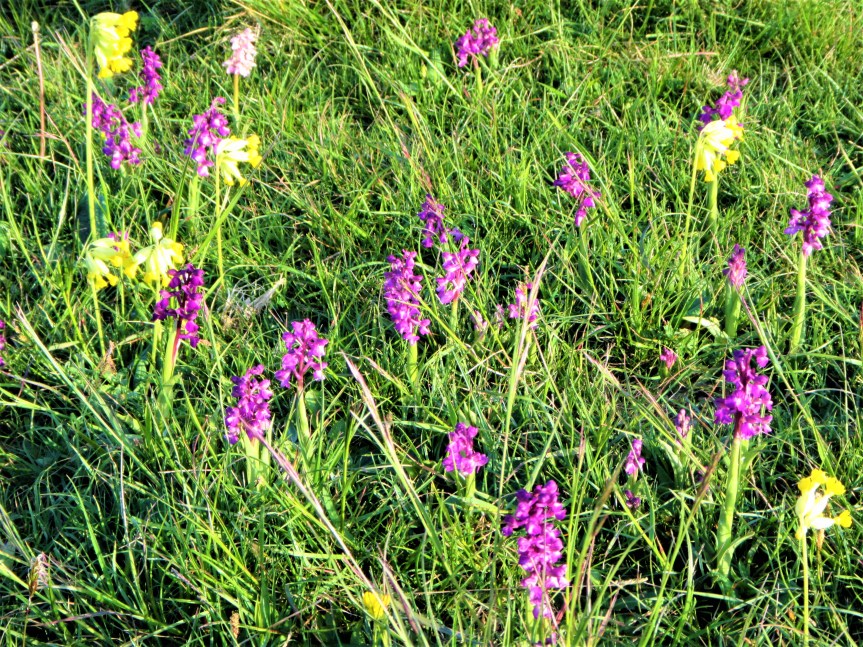
 A Year of discovering Stroud's wildlife