Wildlife has fascinated me since I was a small child and I was just 13 when I decided I wanted to work in wildlife conservation. I graduated with a degree in Zoology and have been fortunate to work for some great conservation organisations - The Wildfowl & Wetlands Trust, RSPB, The Conservation Volunteers and Stroud Valleys Project - and with great people who are passionate and hugely knowledgeable about the natural world around us. I moved to Stroud in 1988 and soon realised what a fantastic place it is for seeing natural wonders. I've been walking the valleys and vale of the district ever since.
I guess you’ll recognise this flower straight away – during late April and May, cow parsley seems to erupt out of nowhere as if nature’s said to hell with the diet and sprayed frothy, whipped cream everywhere. I’m so pleased attitudes towards this underappreciated plant have changed from something local councils strimmed out of existence in the 1970s and 80s, to being left to joyously brighten verges and fields – not to mention being motorway service stations for huge numbers of insects.
So which name do you use? Cow parsley seems to be the usual one, however, I prefer Queen Anne’s lace as it aptly describes the beautifully intricate delicacy of the flowerheads. Each ‘flower’ isn’t really one flower, but hundreds of tiny ones in a cluster resembling an umbrella – it belongs to a group of plants which scientists call umbellifers, coming from the Latin umbella meaning a sunshade or parasol.
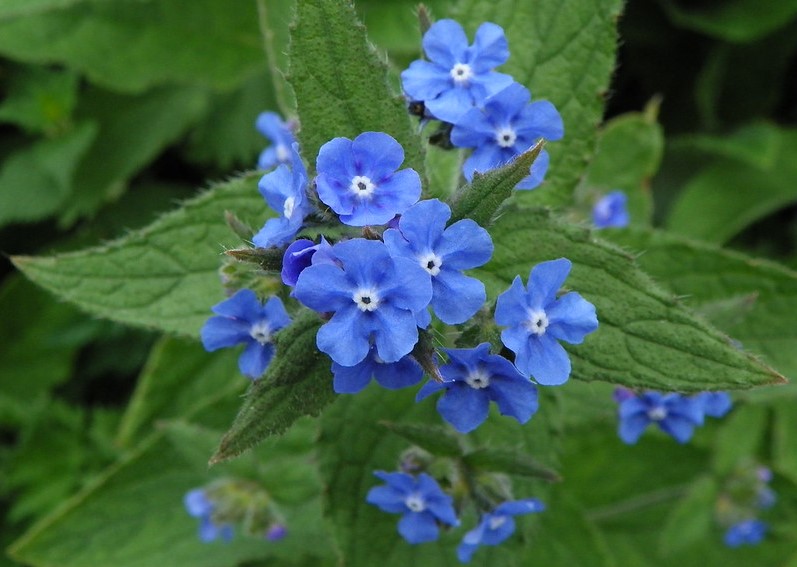
Yes, I know what you’re thinking – it’s blue. So why is it called green alkanet? The second part of its scientific, latin, name (Pentaglottis sempervirens) means ‘always alive’ or evergreen, possibly because the leaves start to appear in late winter or early spring, adding a splash of green to the last grey tendrils of winter. Plus the plant hangs around until well into the summer, so quite a while even though it’s not technically evergreen. Another common name for this flower is ‘evergreen alkanet’.
It’s a cousin of the forget-me-not, borage and comfrey and is a very good food plant for bumblebees, some solitary bees, hoverflies, orange tip butterflies, and the caterpillars of the scarlet tiger moth. It likes growing along walls and buildings so it’s quite common to find it in urban areas where it escaped from gardens hundreds of years ago. It’s hardy, easy to grow and is hardly touched by pests or diseases so it’s great addition to your wildlife patch in the garden – just don’t let it take over as it spreads by runners as well as seeds. Its tap root is long so it’s best to dig up any excess plants to keep it under control.
Cockchafer, May bug, spang beetle and Billy witch are all names for what used to be a common sight at this time of year. pening the curtains and switching on the living room lights after dusk to attract the cockchafers was wildlife watching made easy. But sadly, they haven’t appeared for many years now.
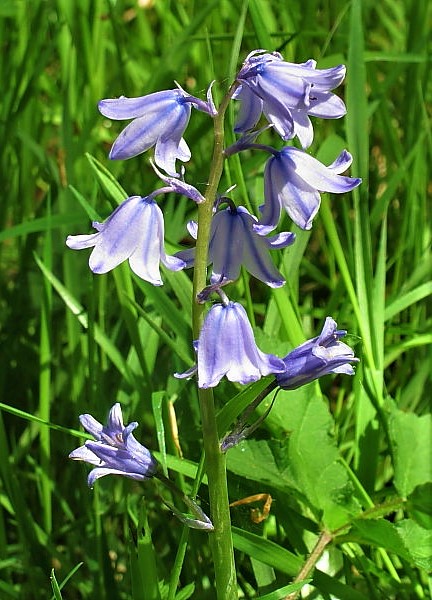
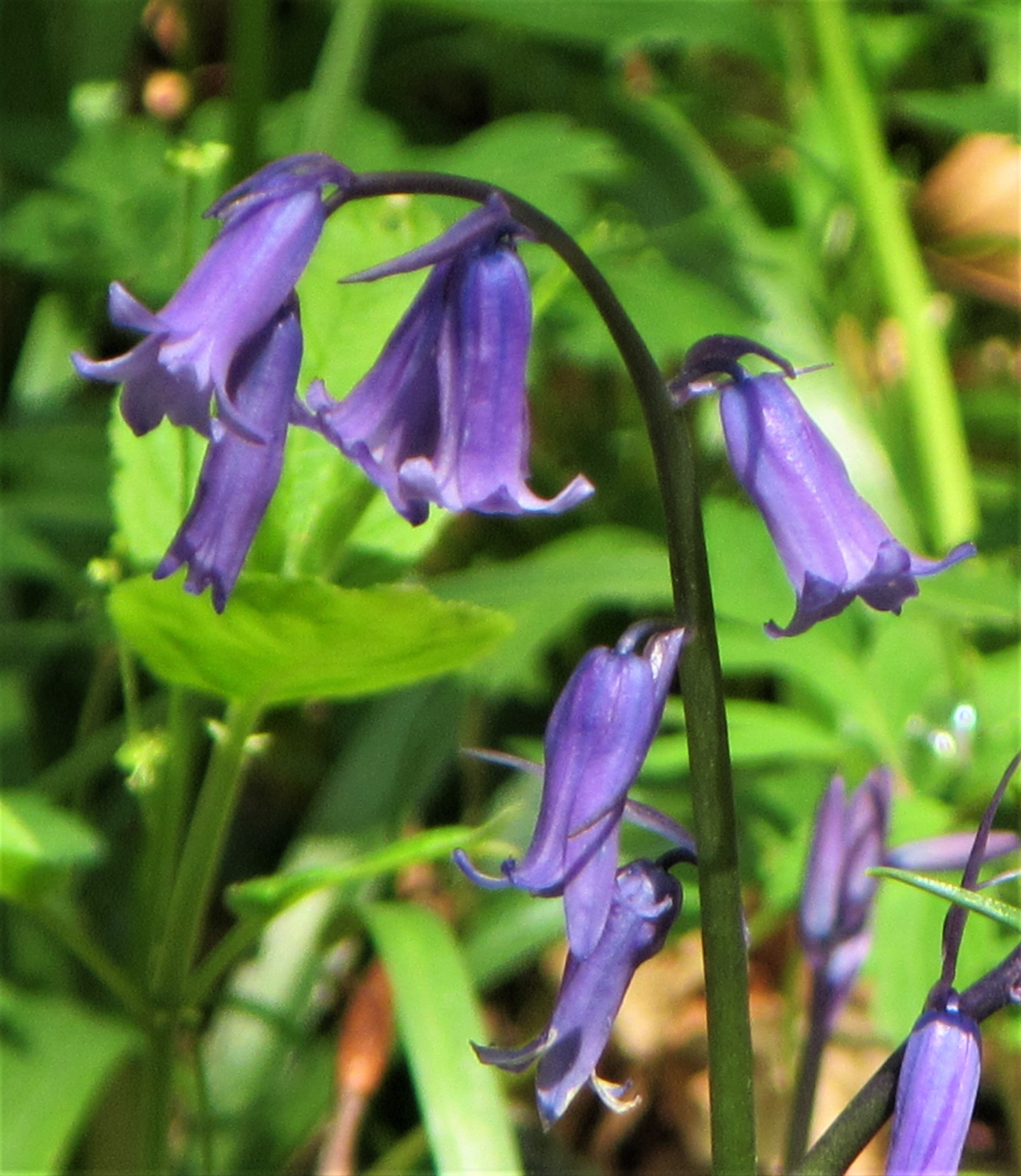
Spanish v English: the native, English bluebell is on the right, and the Spanish one on the left
The bluebell wood is a phenomenon particular to Britain – believe it or not, 80% of all the world’s bluebell woods are found in the UK! The sight of the glorious violet-bluey haze which carpets many woodlands (especially beech woods) begins in late April and lasts until late-May depending upon where you live. The flowering season starts earlier in Cornwall and gradually spreads up the country with Scotland’s flowers being last to the floral party.
Another bluebell came onto the scene when the Victorians introduced the Spanish bluebell, a close relative of our British one, into their gardens. However, at the beginning of the 20th century, it made the great escape over the garden wall and since then has been popping up in woods, hedgerows, and in roadside verges.
I guess it’s a safe bet that you know what bumblebees look like and you’ve probably seen them cruising around flowers if you’ve a garden and, like me, you’ve been outside impersonating a lizard by basking in the recent, lovely sunny weather.
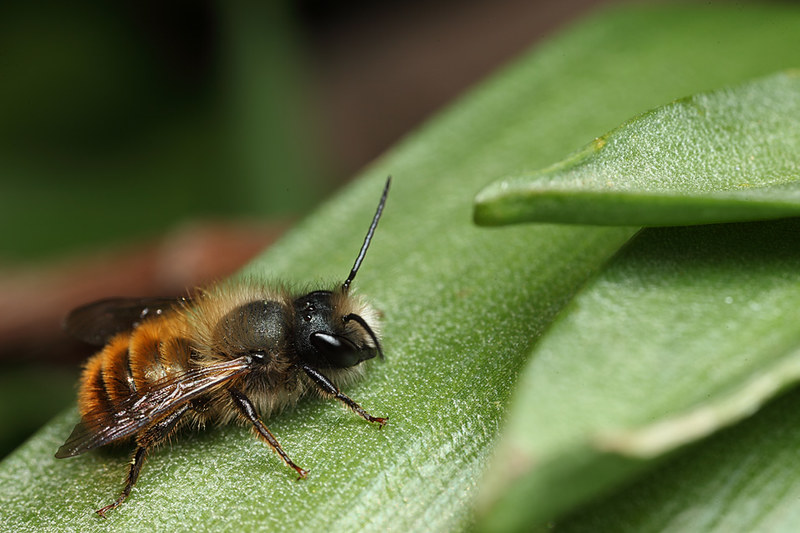
If I asked you what bees are vital for pollinating a third of our food crops and most of the UK’s flowers, I’m sure you’d say the bumblebee and honeybee. However, they’re not the only ones – there are around 270 types of bee in the UK and one of these is almost 200% more efficient at pollinating flowers than even the honey bee.
OK, so we’re in lockdown right now but the sun is shining and the silver lining to the current situation is that’s co-incided exactly with when nature hits the accelerator pedal – forget June busting out all over, from now to mid May is when nature goes from dormant to wide awake. So for the next few weeks, I thought I’d focus this blog on some of the wild flowers, birds and animals that you may see when you go out for your ‘once- a-day-for-exercise’ walks, or even see in your back garden, to help answer those ‘I wonder what that is?’ questions.
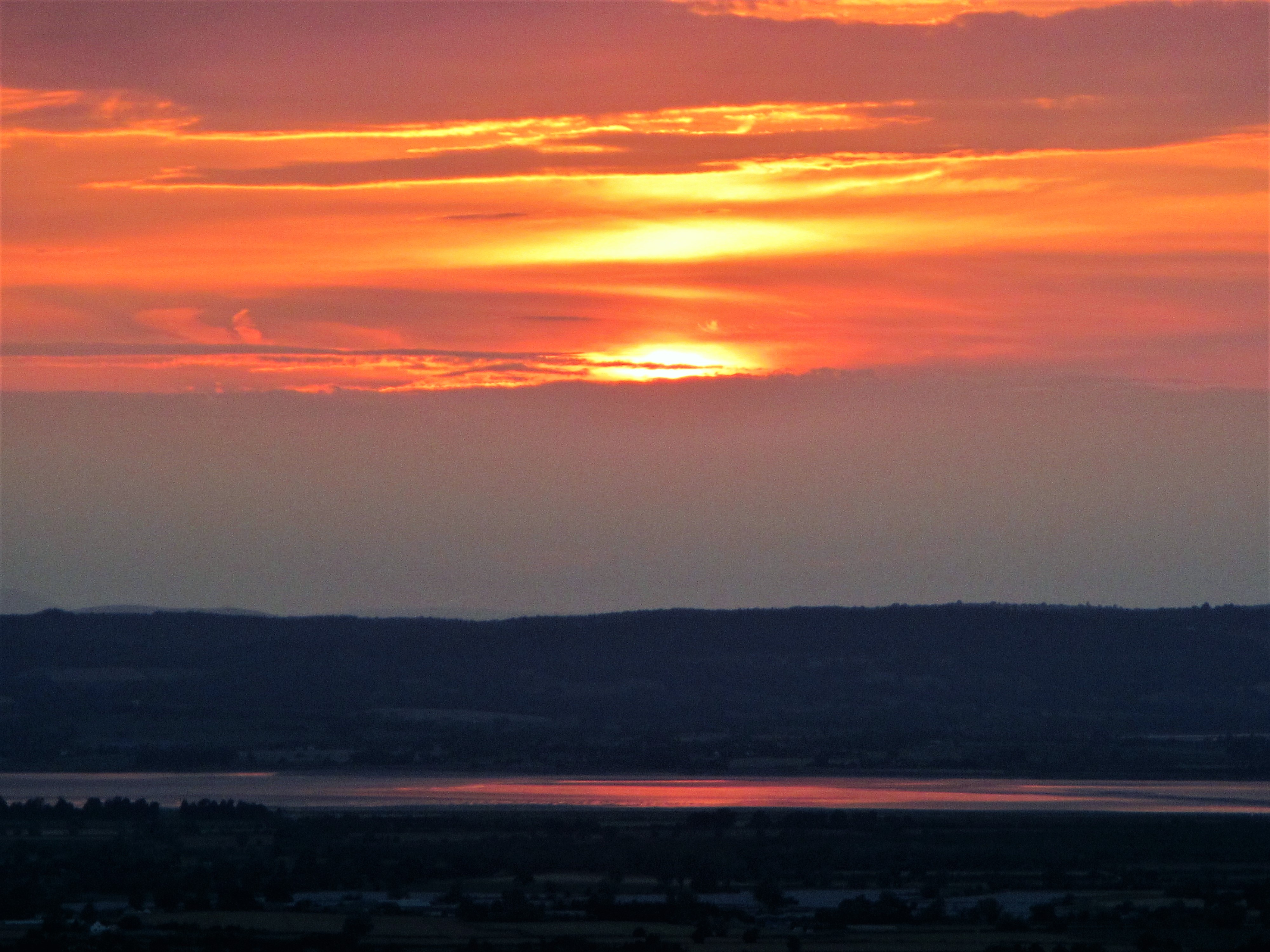
Sunset over the Severn Estuary seen from Coaley Peak picnic site. credit: C Aistrop
Coaley Peak viewpoint and picnic site is one of my favourite wild places around Stroud and most evenings it offers an added bonus – a wonderful cooling breeze blowing off the Severn Estuary. After another day of delightfully hot weather (I’ve vowed not to complain about the present heatwave given how much English people moan when it’s raining, cold and generally miserable), an evening’s stroll here not only offers a wildflower spectacle but also the opportunity to cool down and take in an impressive view and sunset. There are picnic benches dotted around the meadow, and my family has enjoyed evening picnics there – much cooler than a lunchtime one as some of the benches are in shade from early evening onwards. This keeps my husband and daughter happy as they dislike strong sunlight (I sometimes wonder if I’m living with vampires, though I haven’t noticed them staring intently at my neck yet).
The bench is the perfect place to sit, relax and maybe even picnic. credit: C Aistrop
Daneway Banks near Frampton Mansell is the ideal wildlife watching experience – flowers galore, beautiful views, more butterflies than you can shake a stick at and a fabulous pub.
Yep, once more I’ve mixed wildlife watching with a pub stop. Do you notice a pattern here? I don’t know whether this reveals more about the character of naturalists than about wildlife but good pubs and nature reserves seem to go hand-in-hand. Well, all this surveying and watching wildlife does build up a thirst ….
It’s the last flourish of orchids right now and Rudge Hill near Painswick is an ideal place to enjoy this. The flowers of fragrant orchids and common spotted orchids were starting to finish when I visited the site the other day, but pyramidal orchids are in their prime and looking sooo perky. It’s also peak time for meadow flowers and there are more flowers than you can shake a stick at showing themselves off in the sun with the accompanying butterflies dancing around.
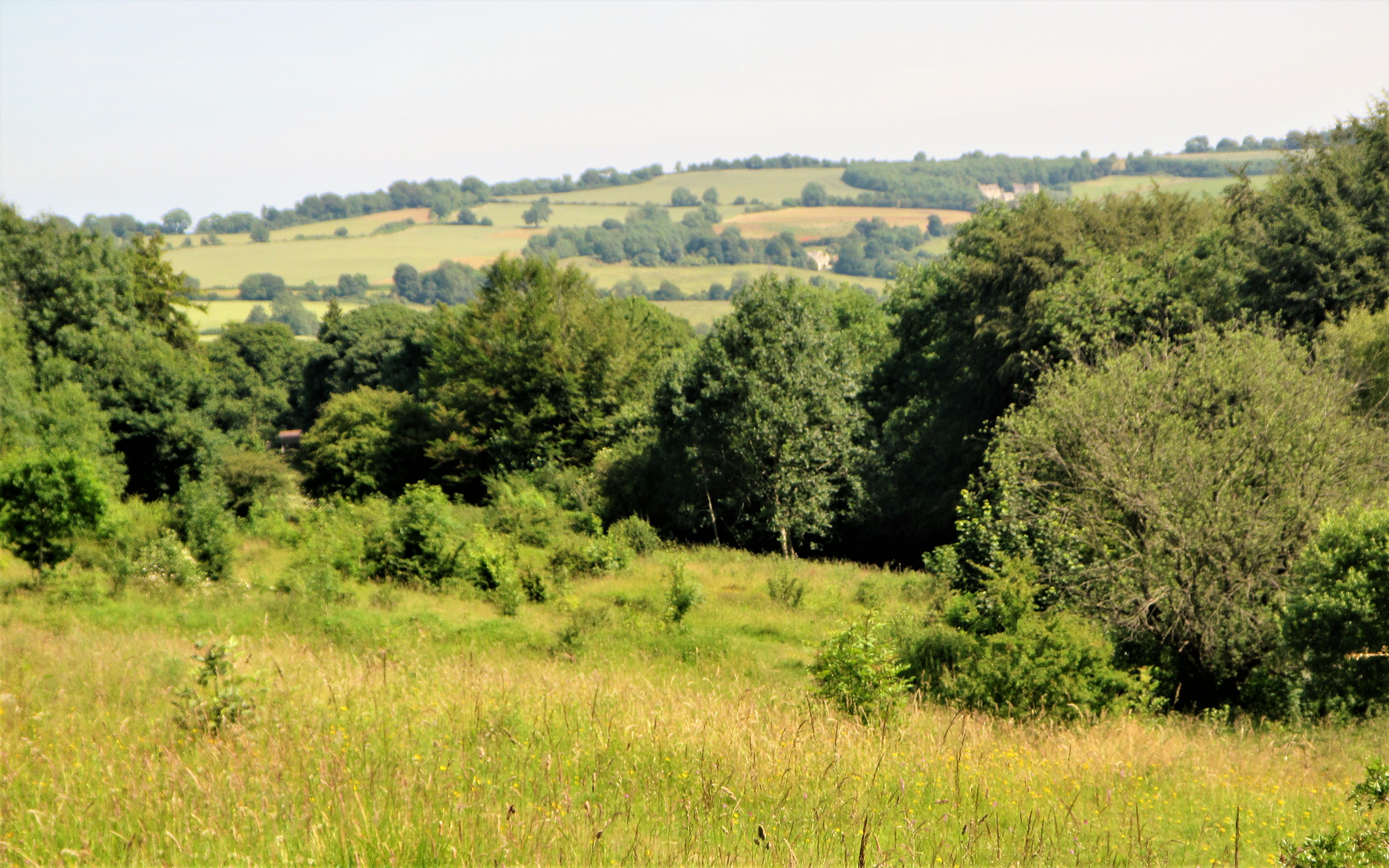
Added to all this is a fantastic 180 degree view from the top, taking in Painswick, the church, Sheepscombe and into the distance along the Painswick valley. It’s such a sublime site, especially on a sunny day, that I dare you to not to break into a ‘Sound of Music’ moment: you know the one – the opening scene where Julie Andrews runs through the meadow on the mountainside, arms outstretched singing ‘The hills are alive….’. And then you can recover your composure in the fabulous Edgemoor Inn just across the road. So this is 4 star wildlife watching!
The roll-call of flowers is captivating as are their names: fairy flax, rest-harrow, yellow rattle, common scabious, bird’s foot trefoil, heath bedstraw, wild thyme, centuary, dyer’s greenweed, horseshoe vetch, rock rose, milkwort, lady’s bedstraw…I counted over 25 different species in flower the other day.
There were also twayblades – one of the orchids but easily missed as it has a flower stalk of small, green flowers. Look for two very broad leaves at ground level – these are the only leaves it has and the flower stalk grows upwards from the middle where they join. The name twayblade comes from the old English words for two and leaves.
You won’t miss the butterflies though that are flitting around everywhere. This hot, sunny weather is ideal for them. To have a good chance of seeing them, visit the reserve earlier in the morning before they’ve had the opportunity to really warm up. Once that happens, they zip about like bikes at the TT Races and it can be difficult to discover what they are as they won’t stay still. Flower spotting sometimes has a lot going for it! I saw marbled whites, meadow browns, common blues, and small heath. I didn’t see the Duke of Burgundy butterfly, however, which is rare now in the UK and declining in numbers alarmingly. Rudge Hill is a perfect spot for them and thankfully they’re flourishing here.

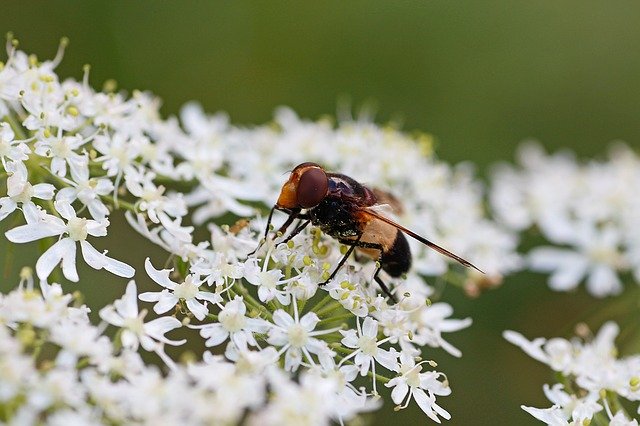

 I guess it’s a safe bet that you know what bumblebees look like and you’ve probably seen them cruising around flowers if you’ve a garden and, like me, you’ve been outside impersonating a lizard by basking in the recent, lovely sunny weather.